Technical Program
The Conference Technical Program provides paper industry engineers and maintenance professionals valuable knowledge that can be applied to daily mill responsibilities.
Conference participants will:
- Learn about changes in electrical engineering, maintenance and safety practices, standards and codes.
- Experience equipment upgrades in other plants, hear about the projects that worked and the ones that didn’t.
- Acquire skills in generator and motor protection, determining relay settings and troubleshooting failures.
- Discover how to justify electrical upgrades with an emphasis on efficiency, reliability and safety.
- Network with other attendees that are extremely knowledgeable and actively working every day in the industry to make industry facilities, safer and more competitive.
The PPIC technical program is developed over the course of a 2 year period by dedicated members of the IAS Pulp & Paper Industry Technical Committee.
DOWNLOAD
2026 Schedule
PAST EVENTS
2025 Schedule
2024 Schedule
2023 Schedule
2022 Schedule
PDH CREDITS
Professional Development Hours are awarded for all technical sessions and tutorials attended. In general, 3.5 PDHs are awarded for each morning or afternoon session. Half-day tutorials receive 4 PDH, full-day tutorials get 8 PDH. Certificates are available at the end of each technical session or tutorial.
2026 TECHNICAL CONTENT
– Subject to Change –
PAPERS PRESENTED
DOE 2027 Efficiency Mandate: Impacts on Low Voltage Motors
B. Oakes, Z. Xie, G. Castro
Practical Example of Dynamic Braking Resistor Specification for a Paper Roll Lowerator
S. Murphy
Permanent Magnet Motor Overhaul: Safe Diagnostic Evaluation, Handling & Repair
P. Diouf, K. Klontz
Challenges & Opportunities of Idling a Mill: The Final Lifecycle
G. Drewiske
Review of Energizing High Power Medium Voltage AC Drives
S. Simms, I. Gibbs, G. Braga, T. Farr
History of AC Motor Protection
R. Johnson, D. Forsman, D. Durocher
Special Treatment: Temporary Power in Construction
J. McManigal
Reducing the Risks of Shock & Arc Flash Hazards: Addressing Age, Debris, & Environmental Factors in Electrical Systems
C. Fink
Passive MV MCC Arc Resistant Construction Without Opening to the Environment
S. Simms
Mitigating Electric Risk in MV Adjustable Frequency Drive Systems
A. Vandermeulen, S. Simms
Protective Relay Networks & Their Role in the Evolution of Power Protection
R. Farkas
Comprehensive Offline Diagnostic Testing & Visual Inspections for High-Voltage Turbo Generators
S. Gaidhu, K. Pyc, A. Shaikh
Application of Transformer Differential Protection at Industrial Facilities: Fundamentals & Advancements
M. Ramlachan, C. Wester, C. Washington
Techniques for Time Synchronization & Significance in Industrial Facilities
C. Crites, D. Ransom, M. Pilon, D. Kliebert
Load Shedding Consideration & Strategy
A. Wu
The Looming Crisis of PLC Technical Debt: Why Legacy Logic is Becoming the Greatest Unspoken Risk in Industrial Automation
H. Grimmett
Transient DC Arc-Flash Incident Energy Calculations for DC Distribution Systems
A. Marroquin, C. Carne, W. Brown, T. Landry
Lightning & Grounding Issues Impacting Safety & Performance of Liquified Natural Gas Supplied Power Generation Plants
D. Shipp, J. Vallejo, J.H. Batista
Best Practices for DCS Upgrades: End of Life Control Systems Migration
A. Spears, M. Clark
NFPA 70B Impact on Continuous Thermal Monitoring… and Vice Versa?
L. Powell, P. Baen
Understanding Ground Current Effects Using Common Isolation Transformers in Drive Systems
B. Sainz, E. Martinez
Conversion of a Paper Machine Dryer & Calender from Steam Turbine to Sectional Electrics
M. Kozlowski, S. Ballenger, D. Deese
KEYNOTE PRESENTATION
Maintaining Safety Amidst Evolving Regulations
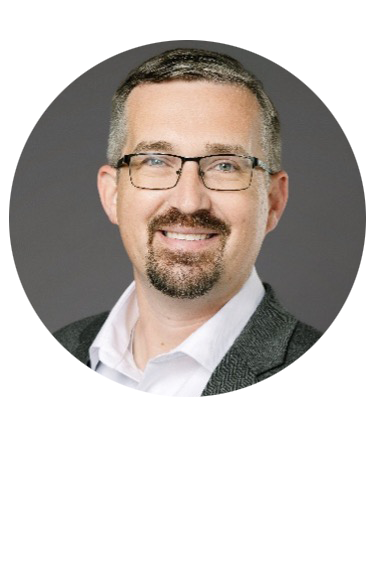 Drew Thomas
Chief Engineer, NFPA70 AHJ
Hanford Mission Integration Solutions
PANEL DISCUSSIONS
Strategy to Extend the Life of Aging Power Distribution Equipment
Explore proven strategies to keep aging power distribution systems reliable and cost-effective. Learn how condition monitoring, modernization, and predictive tools can help mills reduce downtime and optimize budgets.
Todd Legette (International Paper)
Walter Simpson (Engineering Group of the SE)
Greg Drewiske (Billerud)
Michael Harrington (Domtar)
Cybersecurity Requirements from Multiple Perspectives
As IP-based and COTS technologies expand in process industries, OT cybersecurity risks and compliance pressures continue to grow. This panel examines requirements and expectations across asset owners, integrators, and manufacturers. Learn how alignment across stakeholders strengthens cybersecurity outcomes and reduces operational risk.
Bryan Gaynor (Domtar)
Patrick Dixon (DPAS)
Daniel Tinsley (Eaton)
SUBCOMMITTEE SESSIONS
Drives & Controls Systems
Power Distribution Systems
Process Control, Engineering, Maintenance & Construction
Safety & Training
ATTENDEE FAVORITE
Unusual Failures
Greg Drewiske (Billerud)
TUTORIALS
Switchgear Retrofits:
Lessons Learned in Circuit Breaker
& Switchgear Retrofitting Over
the Past 40 Years
4 hours
John Webb & Mark Heiny (ABB)
Thursday | June 11
8:00am-noon
Retrofitting and upgrading older switchgear assemblies can be a cost-effective method to extend the life of electrical distribution equipment. The practice of retrofitting switchgear with new design circuit breakers stretches back more than 40 years. Serious retrofit failures in the early years drove the creation of IEEE standards to establish minimum levels of design, construction, and testing. This tutorial reviews the history of switchgear retrofitting and conversions and more recent methods that effectively and economically extend the useful life, reliability, and safety of all types of low and medium voltage power equipment.
Registration Fee: $125
Induction & Synchronous Machines Used in the Pulp & Paper Industry
4 hours
Jacques Leger & Danny Besmer (WEG Electric)
Thursday | June 11
1:00pm-5:00pm
Induction and synchronous machines are both widely used throughout the Pulp and Paper industry, serving critical roles in applications including refiners, chippers, and vacuum pumps. This tutorial provides a comprehensive technical overview of both motor types, beginning with fundamental construction and extending into synchronous specific topics such as excitation systems and application specific design considerations.
The tutorial will start with a high-level overview of major machine components such as stators, rotors, enclosure types, and critical auxiliary equipment. Advantages and limitations of induction and synchronous motors in terms of efficiency, power factor, starting performance, and reliability for typical pulp and paper processes will be reviewed. The tutorial will then place special emphasis on synchronous motor technology, examining both brush and brushless excitation systems, including their operating principles, maintenance requirements, and selection criteria based on application needs. Finally, the session will address recommended testing practices and routine maintenance for induction, brush and brushless synchronous machines, providing practical guidance for maximizing reliability, performance, and service life.
Registration Fee: $125
NEC® 2026 Code Changes for Engineers: Understanding the New Requirements, Their Intent, & Their Impact on Electrical Design
16 hours
Thomas Domitrovich (Eaton)
The National Electrical Code® (NEC) continues to evolve to address emerging technologies, safety research, and industry best practices. With the 2026 edition introducing new structure, reorganized requirements, and significant technical updates, design engineers must understand how these changes affect both current and future projects.
This two-day, engineer-focused seminar delivers a comprehensive review of the 2026 NEC changes—organized the same way the code is structured. Attendees will explore not only what changed, but why it changed, how to apply the updates in real-world designs, and how these revisions may influence forthcoming designs, specifications, and installations as jurisdictions adopt the new edition.
DAY 1 : Chapters 1–4
General Requirements & Foundational Changes
Thursday | June 11
8:00am-5:00pm
This first day focuses on the core of the NEC—the general requirements applicable to almost every electrical installation.
DAY 2: Chapters 5–8
Special Occupancies, Equipment,
& Systems
Friday | June 12
8:00am-5:00pm
Day two transitions to special requirements and emerging technologies—areas experiencing rapid growth and significant code activity.
Note: Electrical engineers designing electrical systems for general applications in industry should attend Day 1. Engineers designing industrial, commercial, multi-family and residential systems should attend both Day 1 and Day 2.
Registration Fees:
Day 1–$175
Day 2–$175
Day 1 & 2–$285
Copy of NEC 2026:
Soft Bound–$152
Spiral Bound–$162